Algal Bloom in South Australia
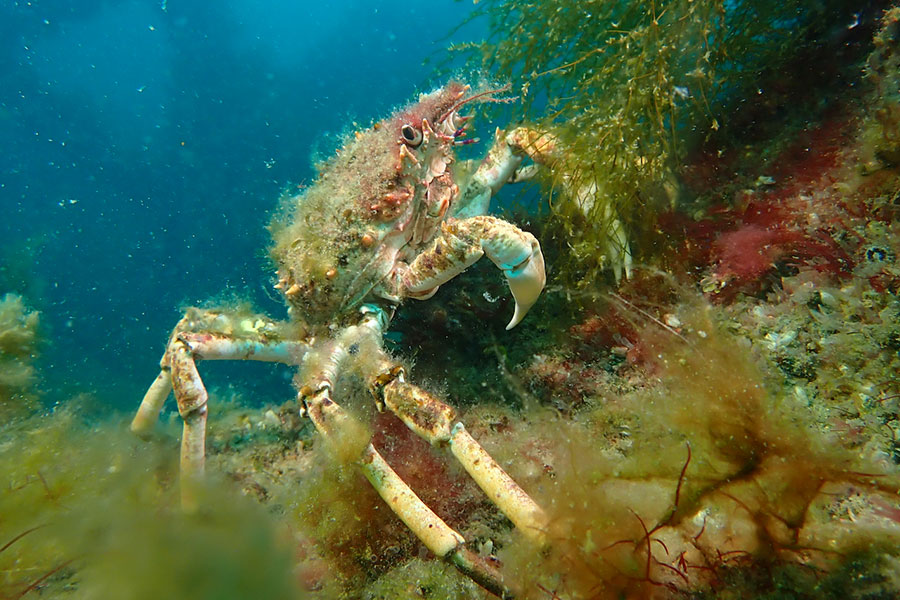
Great spider crab on the Dredge, February 2026
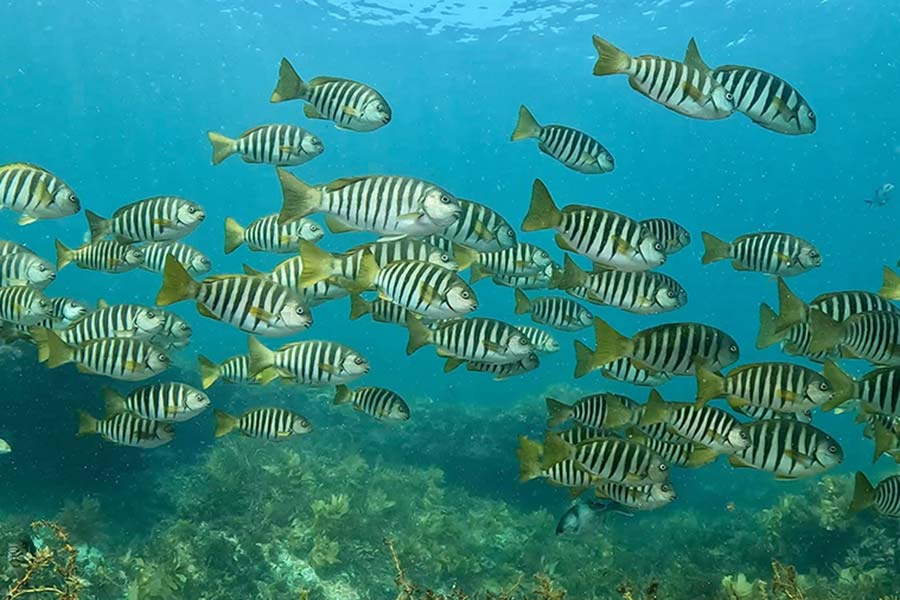
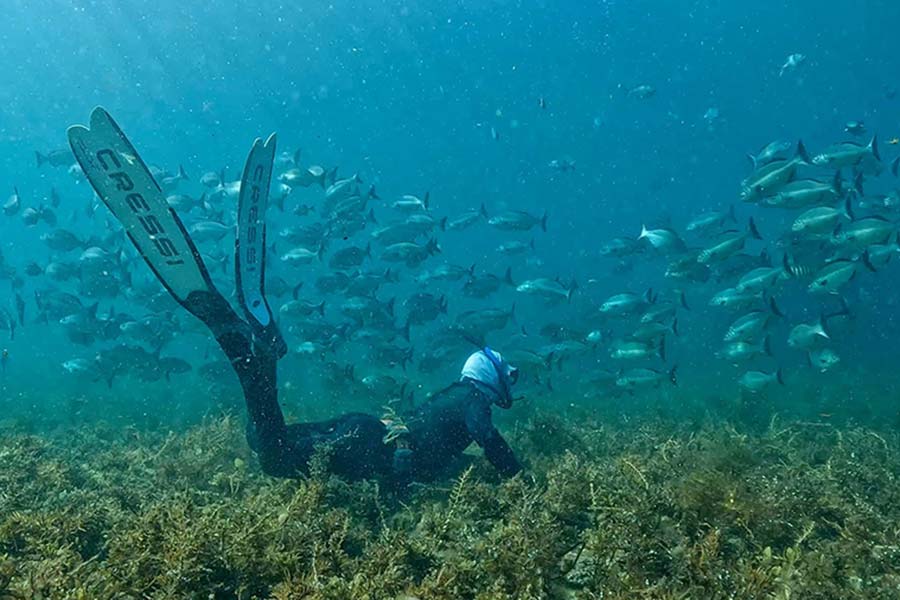
Silver drummers, Aldinga reef, March 2026 – Credit: Andy Burnell
Signs of recovery on South Australia’s reefs
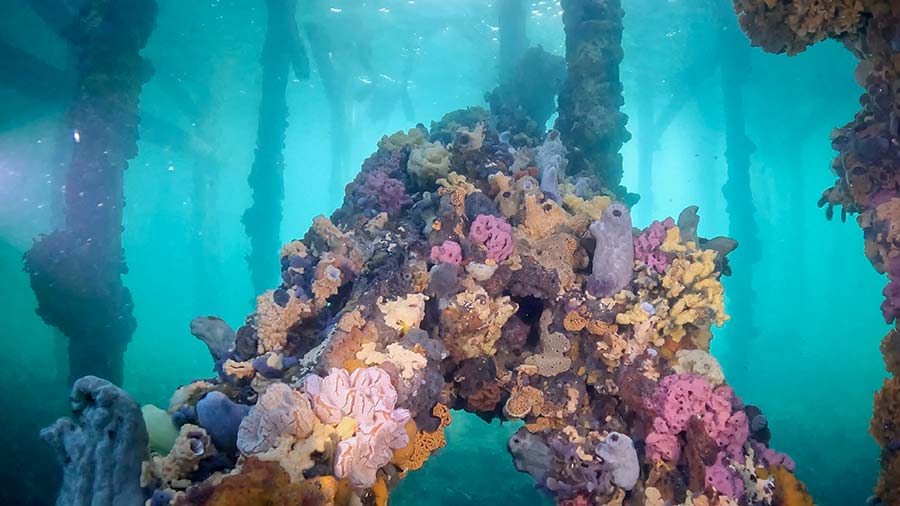
The 2025-26 harmful algal bloom reset our coastal ecosystems, but divers are observing incredible resilience and beauty on our reefs. We have strong evidence now of the return of tunicates, sponges and octocorals on jetties and wrecks, and the reemergence of nudibranches, goblin fish and other wonderful marine creatures. Join SA Dive Sites Viz and Conditions for current observations of popular dive sites.
What is the Harmful Algal Bloom?
Primary Industries and Regions SA (PIRSA) and the South Australian Research and Development Institute (SARDI) have summarised the event as follows: “In mid-March 2025, a significant algae bloom of the species Karenia mikimotoi was identified in the waters around the Fleurieu Peninsula in South Australia (SA), particularly near Waitpinga and Parsons Beach. Algal blooms are large growths of microscopic algae that can affect marine life, human health and water quality.” https://pir.sa.gov.au/__data/assets/pdf_file/0009/477234/sa-algal-bloom-situation-update.pdf
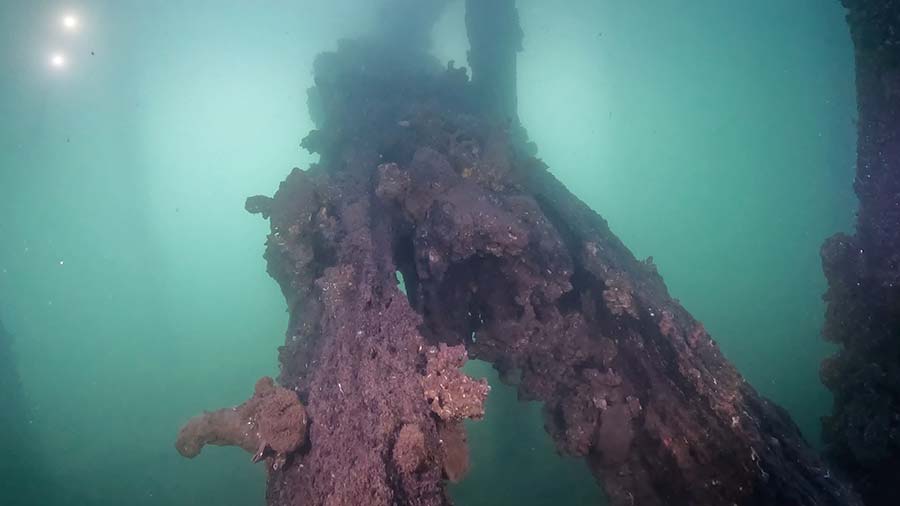
The bloom spread and led to a massive marine life mortality event – hundreds of thousands of fish, invertebrates, and other species dying on local reefs, jetties and wrecks and washing up along the east and west coastlines of the Gulf of St. Vincent. Most of the sessile life — sponges, octocorals, tunicates, anemones, and more — died, leading to a dramatic loss of colour and vibrancy on jetty pylons and reefs. More than one species of toxic algae, including Karenia cristata, has now been identified as contributing to the marine life mortality event.
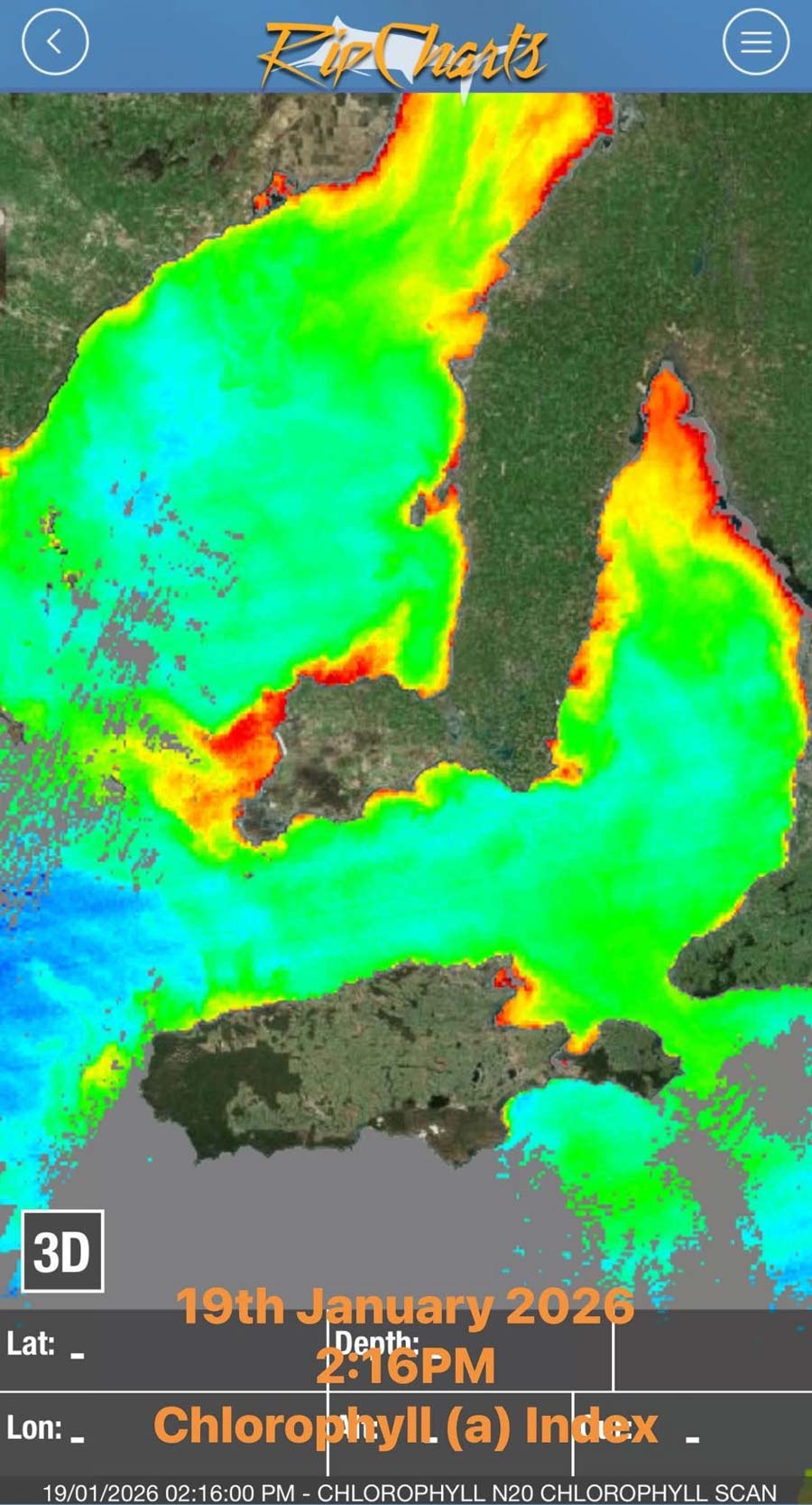
This is not a unique event. Other jurisdictions have experienced similar devastating blooms — New Zealand, Western Australia, Florida’s Gulf coast to name only three. While there is still much to be learned about the cause of the SA bloom, contributing factors include including nutrient runoff from the River Murray floods in 2022-23, a cold-water upwelling that brought additional nutrients to the surface and an unusual marine heatwave in 2025. As the bloom shifts and moves from the Gulf of St. Vincent into the Spencer Gulf, scientists are working to understand all factors, including long term climate change impacts and coastal zone management that may be influencing how the bloom spreads and retreats.
With changing ocean temperatures and currents coming with autumn and winter, 2026, there are signs that the bloom is abating in some locations.
Can you go scuba diving, free diving or snorkelling?
As of March 2026, at the time of writing, the Adelaide metro waters, the Fleurieu and east side of the Yorke Peninsula (Edithburgh, Wool Bay) have improved, with hundreds of divers and snorkellers back in the water. The southwest of the Yorke Peninsula is at present an active bloom area https://www.algalbloom.sa.gov.au/testing-and-monitoring, with Corny Point, Point Turton and Port Hughes affected. The southern coast of Kangaroo Island has also been significantly impacted.
If you are concerned about exposure to the bloom, we recommend you consider the following:
- PIRSA advises that you avoid entering the water if it is discolored or foamy.
- Join the Facebook group SA Dive Sites Viz and Conditions: divers and snorkellers report regularly on local conditions, with photos, including algal bloom impact and recovery observations
- Consult online mapping and dashboard tools such as
- https://sa-algal-bloom.streamlit.app/
- Blooming’ algae’s map, designed to integrate with the SA Government’s live water testing Feature Server, https://www.bloominalgae.com.au/map.
- Download the Beachsafe app, which now includes SA Algal bloom beach reports, at https://beachsafe.org.au/apps
- A number of Facebook groups actively track and comment on the progress of the bloom.
What can you expect to see?
While the damage has been extensive, there are exciting signs of recovery. Watching an ecosystem respond can be a rewarding experience in its own right, with many opportunities to photograph, record and share what is changing around you.
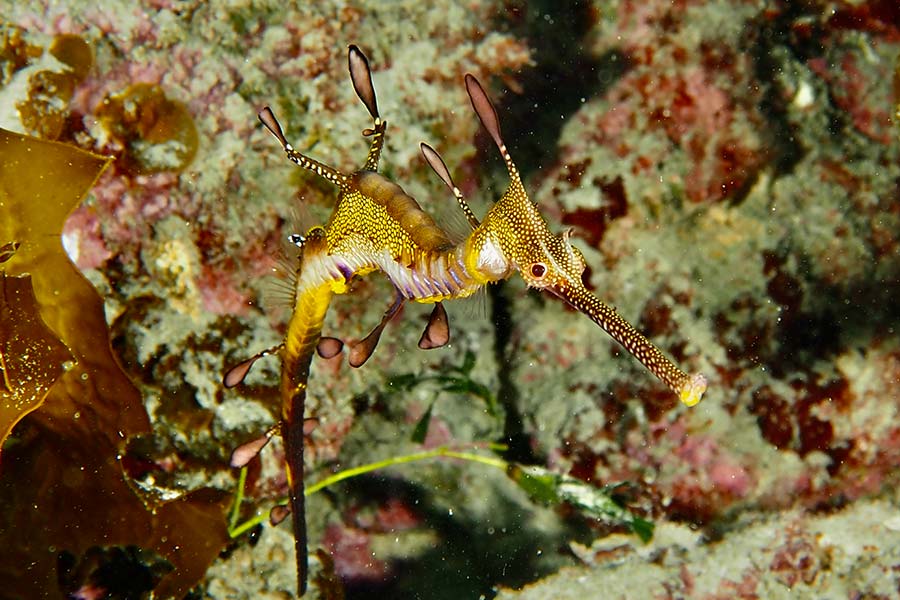
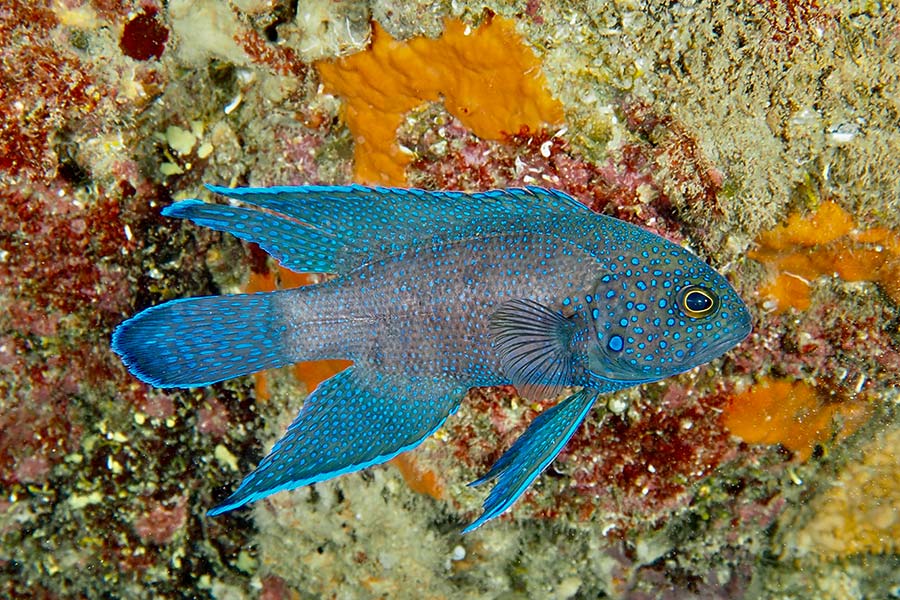
- In areas that seem to have been somewhat sheltered from the event, Second Valley and Rapid Bay, divers have seen strong populations of weedy sea dragons, the occasional Leafy seadragon, blue devils, juveniles of many species, and healthy seagrasses and seaweeds.
- In Adelaide area waters, the reemergence of tunicates, octocorals and some species of sponge on jetty pylons and wrecks have been reported
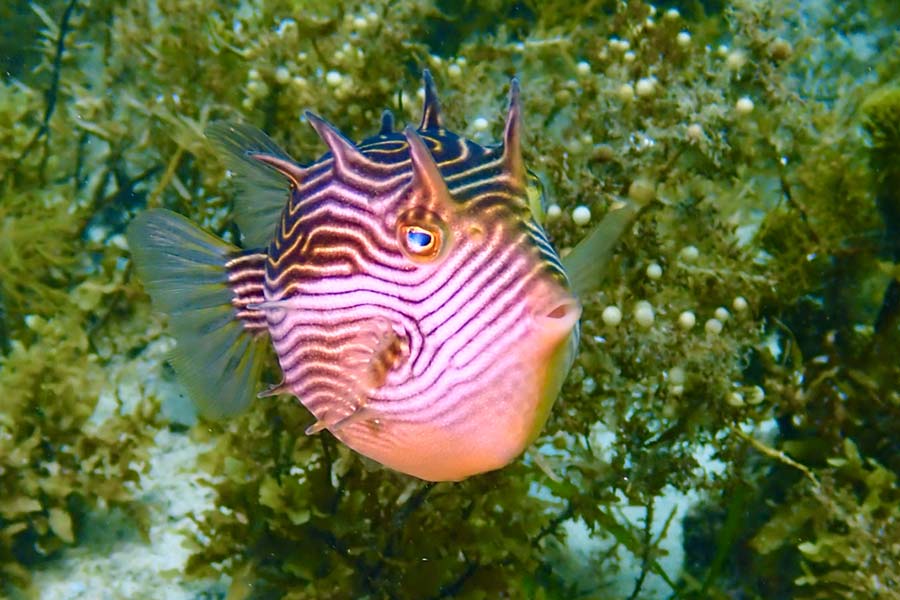
- Increasing numbers of fish species are returning, including schools of whiting
- Great spider crabs are everywhere! These are scavengers, and are performing a vital service feeding on the dead marine life and algae covering the local wrecks and reefs, helping to clean up the ecosystem.
What can you do to help?
- Photograph impacted marine life along the beaches and reefs, and upload to the iNaturalist SA Marine Mortality Events 2025-2026 observations at https://www.inaturalist.org/projects/sa-marine-mortality-events-2025-2026.
- Help with beach cleanups but be sure to photograph and log what you have collected on iNaturalist.
- Help document the recovery. Join one or more of these citizen science initiatives:
- Edithburgh & Wool Bay Jetties Marine Watch: https://ypmarinewatch.com/
- Reef Rangers have established a monitoring operation at Port Noarlunga. https://www.thereefrangers.org/
- Marine Life Society of SA updates its blog with regular observations on the bloom: https://mlssa.org.au/
- Seadragon Search: it is vital to track the impact of the bloom on SA’s iconic species: https://seadragonsearch.org/
- Tracking Great spider crabs will also be helpful in understanding the recovery process: https://www.inaturalist.org/projects/spider-crab-watch
- Contact Divers for Climate for monitoring projects they may have underway: https://www.diversforclimate.com/
- Support building oyster reefs
- Largs Bay Shellfish reef restoration: Adelaide OzFish Chapter are “working to establish the ‘Adelaide Oysterworld’, a shell recycling site which is set to divert shellfish shells from landfill into new shellfish reefs.” You can get directly involved in this work by helping to clean and prepare shells, build Robust Oyster Baskets (ROBs), and participate in reef building events: https://ozfish.org.au/projects/largs-bay-shellfish-reef-
- Register with the State for other volunteer opportunities at https://dew.rosterfy.com.au/invite/algalbloom
- Stay informed. Much has been written already about the bloom. Some samples:
- Government of SA: Algal Bloom Update https://www.algalbloom.sa.gov.au/
- Parliament of Australia Senate inquiry: https://www.aph.gov.au/Parliamentary_Business/Committees/Senate/Environment_and_Communications/AlgalBloom48P/Report
- Divers for Climate SA Algal Bloom report: https://www.diversforclimate.com/algalbloomsa
- InDaily’s State Emblem Disappears from Diving Hotspot: https://www.indailysa.com.au/news/just-in/2026/03/11/state-emblem-seadragon-disappears-from-diving-hotspot
- Springmount Advisory in partnership with Conservation Council SA on the cost of the algal bloom: https://www.springmountadvisory.com.au/polluters-pay-the-cost-of-sa-algal-bloom.
- The Guardian: Stripped of life: the deadly South Australian algal bloom is still spreading one year on:
https://www.theguardian.com/environment/ng-interactive/2026/mar/14/algal-bloom-south-australia-update-one-year-on. - ABC’s Four Corners investigation “Toxic Tide” on the health impacts of the bloom and the response of the State: https://iview.abc.net.au/show/four-corners/series/2026/video/NC2603H005S00
What is the State doing?
The State of SA has introduced a series of measures, including (but not limited to):
- Established and meets regularly with the Harmful Algal Bloom Reference Group representing stakeholders
- Established the new Office for Algal Bloom Research, which releases regular updates on the state of the bloom
- Provided economic support to coastal businesses impacted by the falloff in tourism
- Installed a bubbler in the Upper Spencer Gulf to protect Giant cuttlefish eggs
- Secured 6 Algal bloom monitoring buoys with the first two operating in St Kilda and Stansbury in the Gulf St Vincent to do regular water sampling and testing
- Partnered with the Federal Government and Surf Life Saving South Australia on Beachsafe
- Funded the development of additional oyster reefs for long term protection against future blooms, in partnership with eyrelab/Whyalla Dive Shop
What is SDFSA doing?
- Secured a seat on the Harmful Algal Bloom Reference Group, to represent the interests of the diving community
- In consultation with shops, SDFSA submitted a detailed business plan to the Premier’s office to address the impact of the bloom on the diving community, with recommendations for up to four major projects, including opening up a quarry as an alternative site for dive training, removing the exclusion zone around the area of the old Stanvac jetty, moving forward to address what has to be done to make the area around the old Rapid Bay jetty safe for diving, and a new dive site now under discussion with the State. We are in detailed discussions with the State to advance at least 2 of these projects.
- With AusOcean, launched the online petition to make Rapid Bay area safe for diving
- Secured funding from the Office of Recreation and Sport Algal Bloom Response to promote diving and snorkelling in areas that are starting to recover or haven’t been affected.
- Inform the diving community through our monthly Newsletter, with updates on the Algal bloom and related projects
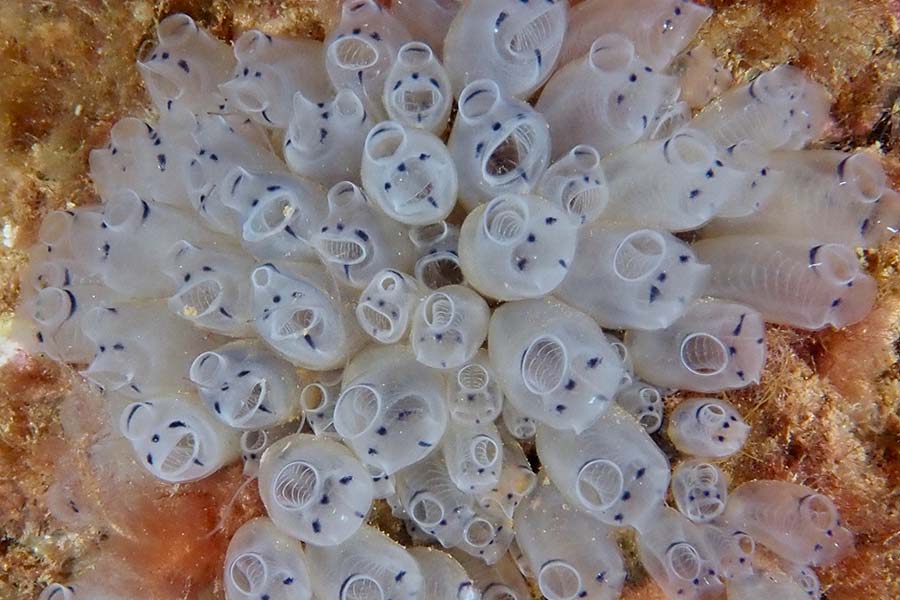
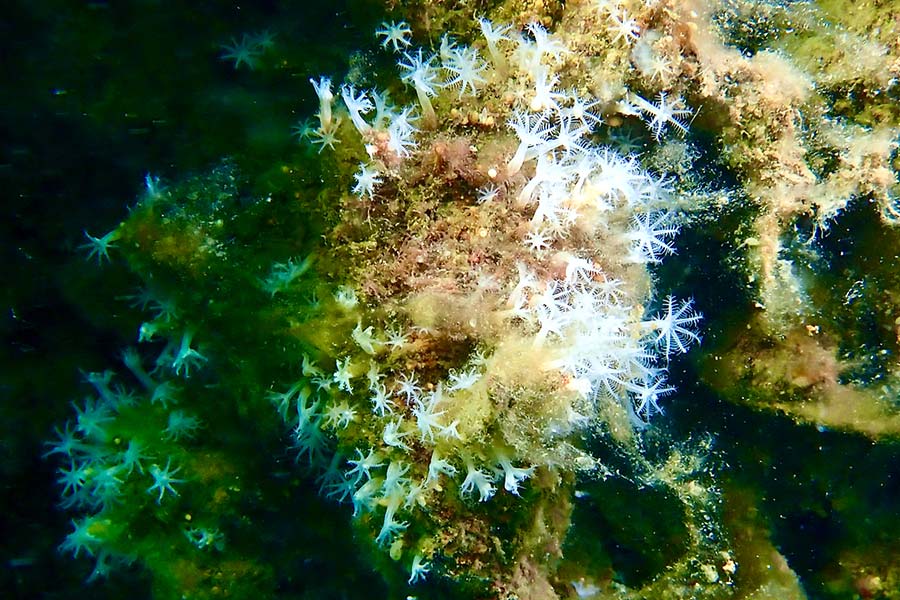
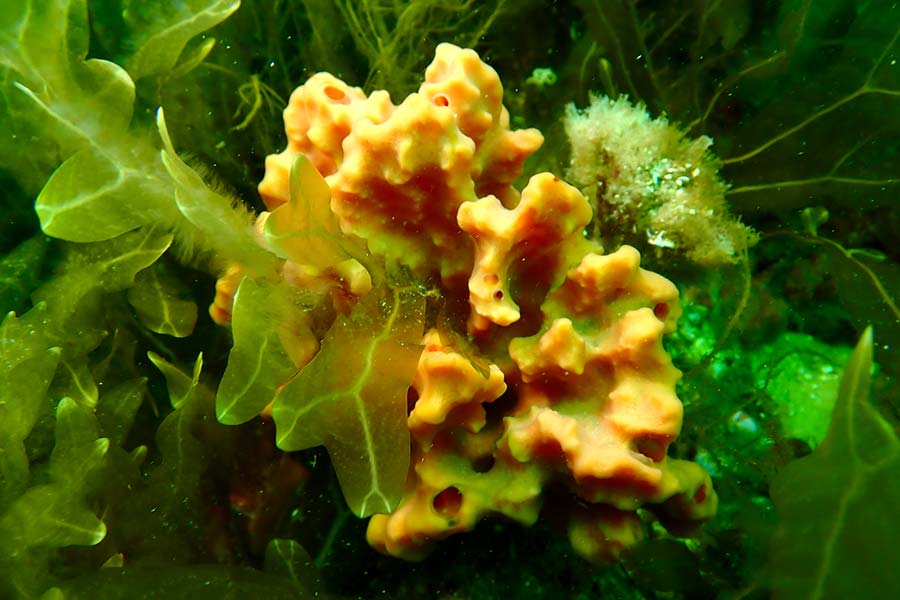
Healthy sponge, Adelaide metro waters, January 2026 – Credit: Heather Creech